Why CALM Conversations Matter
When was the last time you felt frustrated, nervous or even completely defeated during a workplace discussion?
Most workplace conflict doesn’t begin because people have bad intentions. It begins because they feel threatened, misunderstood or judged.
The moment our brain detects danger—even something as subtle as criticism, blame or uncertainty—it shifts into self-protection mode. We stop listening, become defensive, and our ability to think clearly, solve problems and collaborate starts to decline. In those moments, communication becomes about winning the conversation rather than improving the outcome.
When both parties are trying to win or just prove their point, no-one really wins.
Great communicators understand that before people can engage with your message, they need to feel psychologically safe. That’s why I developed the CALM Communication Protocol™—a neuroscience-based framework that helps people communicate with clarity while reducing defensiveness and building trust.
CALM reminds us to:
1. Clarify our intent,
2. Acknowledge the other person’s perspective,
3. Lower perceived threat through our language, and
4. Make meaning together
These four simple steps keep conversations constructive instead of confrontational and transform difficult discussions into opportunities for connection, problem-solving and collaboration.
Whether you’re giving feedback, entering into a tough conversation, leading change or simply having everyday conversations (not just at work), how you communicate determines whether people shut down or lean in. Because the goal isn’t just to get your message across. It’s to create the conditions where people are willing to hear it.
It’s not always easy either, it takes a willingness to learn, it takes skill and it takes practice.
And the business impact is significant. Research consistently shows that poor communication leads to increased stress, reduced productivity, damaged relationships, missed deadlines and costly misunderstandings. Yet every one of those outcomes begins with a conversation. When we communicate in a way that reduces perceived threat and builds trust, people remain open, think more intelligently and work together more effectively.
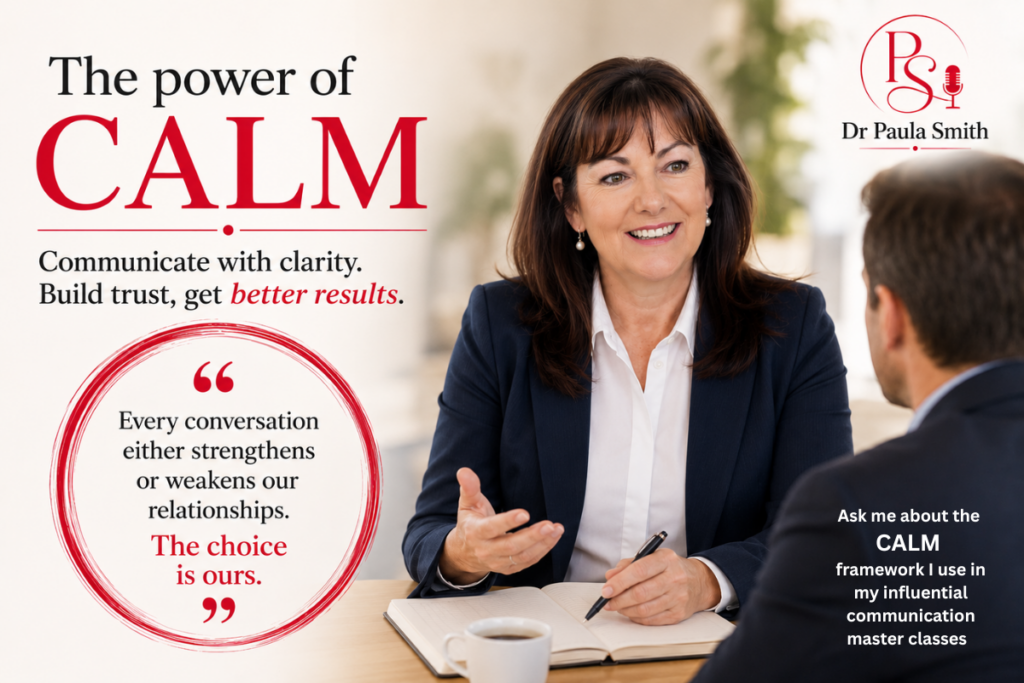
Every conversation we have either strengthens or weakens our relationships.
The choice is ours.